What are the chances of getting pregnant after IVF (or ICSI)? The ReceptIVFity test has been further developed recently and now gives you even more insight into your chances. A quick recap: what does the test involve again?
The test is performed before IVF or ICSI treatment and examines whether the conditions in the uterus are currently suitable for embryo implantation. This is assessed based on the microbiome: the composition of bacteria in the vagina. You can read here about exactly how that works and how easy it is to take the test.
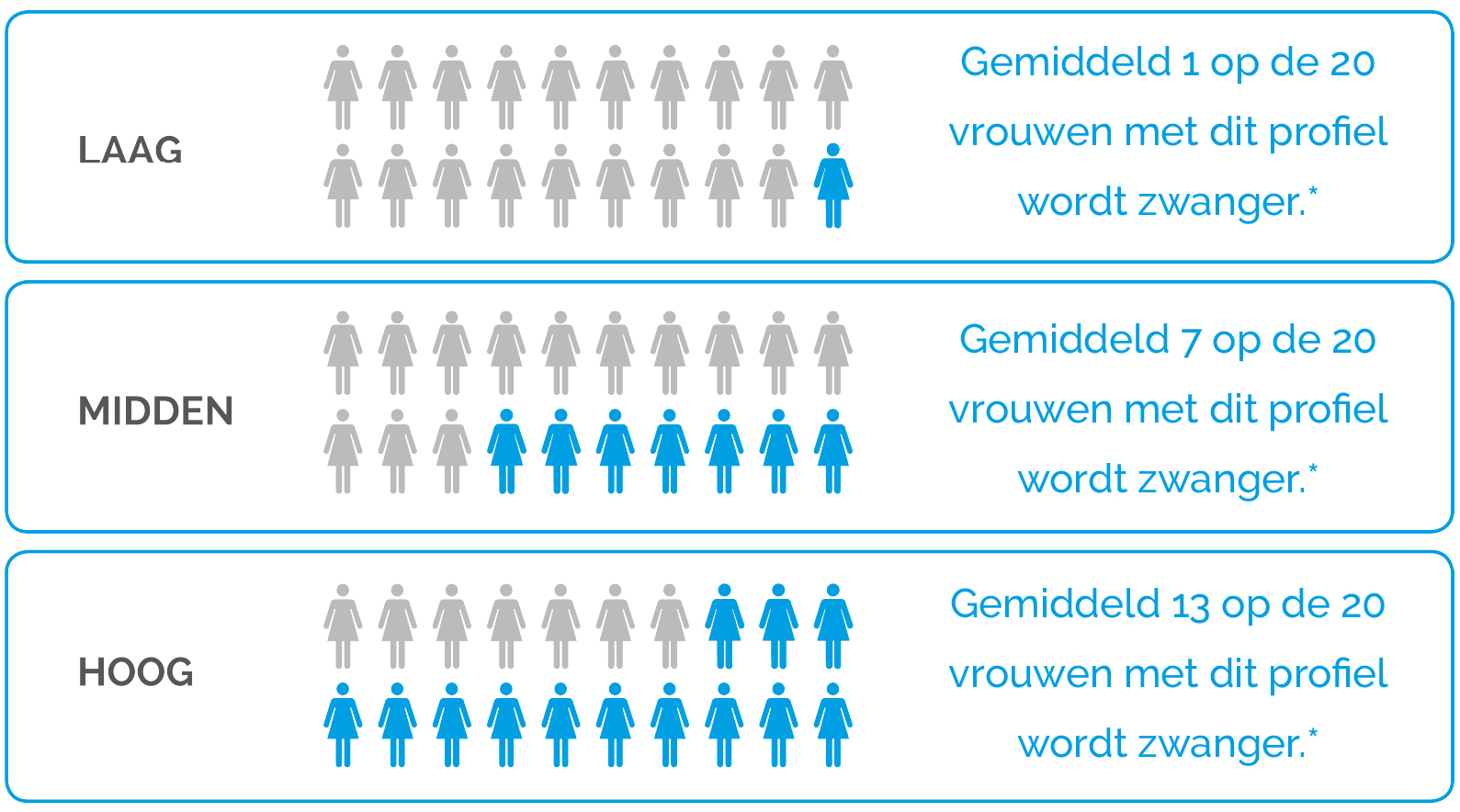
Initially, the test simply identified a favorable or unfavorable profile. The bacterial profiles have now been further refined. Since July 2018, test results have been presented as follows: high, medium, and low scores. With a low score, the chance of pregnancy is 5.9%. A medium score means a 23.6% chance. Do you have a high score? Then your chance of pregnancy after IVF (or IVF/ICSI) is 52.6%. These possible scores and their corresponding chances of pregnancy are shown in all communications. The test is available at a number of fertility clinics.