About us

Strengthening fertility decisions through science

ARTPred is committed to providing evidence-based insights that help individuals, women and couples make informed decisions about their fertility journey.

Our mission

Revolutionizing fertility care by providing personalized, science-based insights that empower individuals to make confident decisions about their reproductive health journey.

Our vision

A world where everyone has access to personalized fertility insights, reducing uncertainty and improving outcomes.

What we value

Trust, transparency & discretion

We provide clear, honest information backed by scientific research and clinical validation.

Patient-centered care

Your needs and comfort are at the heart of everything we do, from test design to delivering results.

Continuous innovation

We continually improve our technology and methods to provide the most accurate insights possible.

Leadership

Meet our team

A passionate team of experts dedicated to improving fertility care through innovation and science.

Joep de Mönnink

CEO & Co-founder

Joep de Mönnink has a proven, strong track record as a marketer and manager in healthcare and has an extensive network of IVF opinion leaders. Joep is responsible for General Management, Strategy and Market Access.

Jonathan de Jonge

COO & Co-founder

Jonathan de Jonge, PhD, is responsible for ARTPred’s operations and business development. Jonathan is a serial entrepreneur specializing in bringing medtech companies to life and is a Technology Transfer Professional. He holds a PhD from Maastricht University.

Danyel Deckers

CFO

Danyel Deckers, MEc, is the CFO of ARTPred. Danyel trained as a Certified Public Accountant and holds a Master's degree in Economics from Tilburg University. Danyel previously worked as an auditor at PwC and Warehouse Cooper, and as Vice-President at Reed Elsevier Global Procurement, until he became CFO and CCO of Unlimited Footwear Group in January 2018.

Dries Budding

CTO

Dries Budding, PhD, is the founder and CEO of inBiome and CTO of ARTPred. He specializes in translating fundamental research into new clinical applications, particularly in molecular bacteriology. Dries previously worked as a clinical microbiologist at UMC Utrecht, focusing on bacteriology, epidemiology and molecular diagnostics.

History

A little history

From the first scientific discoveries to today's innovations

The 70s

The first embryo transfer is said to have taken place at Columbia-Presbyterian Hospital (USA) in 1972.
In 1972, the first embryo transfer is said to have taken place at Columbia-Presbyterian Hospital (USA), but it was stopped by the hospital’s chairman, who learned of the experiment and prohibited the embryos from being transferred back into the mother. Three years later, in 1975, Mr Edwards and Mr Steptoe in England announced the first successful pregnancy achieved through IVF; however, it ended in an ectopic pregnancy.

1978 breakthrough

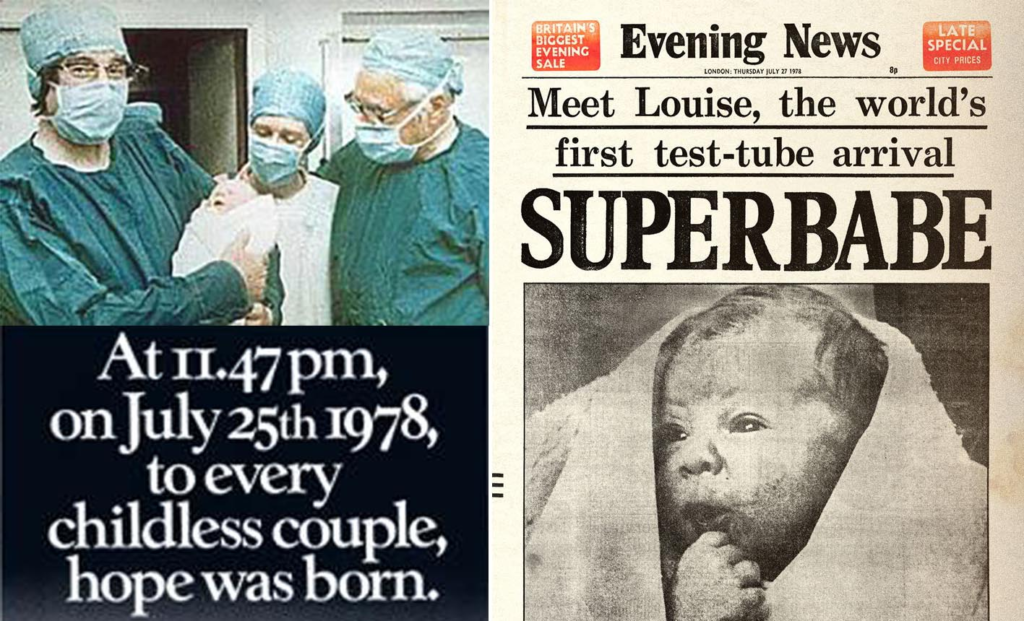
In 1978, Edwards and Steptoe announced the birth of the first healthy baby following IVF in England. Lesley Brown gave birth to her daughter, Louise Joy Brown, who was healthy in every respect. Although the birth of a test-tube baby shocked the watching world, in fact, a century of work had gone into it.

1980 & 1990

In the following decades, progress was quickly made on many fronts. IVF success rates increased with each step.
Fertility drugs were improved. IVF egg retrievals shifted to a vaginal approach instead of laparoscopy. Intracytoplasmic sperm injection (ICSI) put an end in 1991 to the problem of a ‘low sperm count or less viable sperm’. 24-hour ‘livecam’ imaging became available to monitor cell division. Embryo transfers gradually shifted from day 1 to day 3 and can now be carried out on day 5, as embryology laboratories became capable of safely culturing embryos for longer. Cryopreservation techniques were developed.

21st century

Thanks to all these developments, the success rate of IVF treatments rose rapidly in the 80s and 90s. In the 21st century, the rapid rise in pregnancy rates slowed. Today, approximately 30% of all IVF treatments result in pregnancy*.
Is there still room for improvement? Can we further increase pregnancy rates with IVF? At ARTPred, we are convinced this is possible. The key lies not in further improving the embryo, but in the embryo’s implantation, and the microbiome is a strong predictive factor. * This depends greatly on the selection criteria and factors such as sperm and egg quality, the woman’s age, her health, BMI, etc.

Present day

A major milestone has been reached: the development of ReceptIVFity, the world's first microbiome-based predictive test for IVF success.
Would you like to know everything about the clinical research, the test itself and, most importantly, the future implications for women’s healthcare?
get in touch